If the primary function of your website is to sell your product or service, it’s a good idea to send users to a dedicated landing page rather than your website homepage. A landing page is far more important than a website home page for driving conversions.
Landing pages are dedicated sales pages most often used when a user clicks on a social media post or paid advert. However, many people forget to use them in conjunction with SEO. If your website ranks highly for a specific term, the page it points to should be treated as a landing page.
What a successful landing page should contain
Regardless of whether your landing page is for lead generation or e-commerce, a successful landing page will always contain the primary requirements below. This information should be above the fold (i.e. visible on screen before the user scrolls). Arguably, secondary features can appear below the fold, but some may also need to be incorporated within the primary section depending on the business.Primary requirements (above the fold)
- Reaffirm the user is in the right place – Show that your business solves their problem (through headline or imagery)
- Reassure the user that your business is reputable – Build trust (through reviews and accreditations)
- Direct the user on what to do next – Make it clear how to get in contact (through a call-to-action button)
Secondary requirements (below the fold)
- Answer questions or concerns the user may have
- Provide aspiration, inspiration and intrigue
- Give a rough idea of cost
This isn’t a comprehensive list of secondary requirements, and likewise, some may not apply. They depend largely on the type of business you’re advertising.
Additional considerations
In addition, landing pages should:
-
Load quickly
-
Be easy to navigate
-
Be mobile and tablet friendly
Responsive design is essential. By limiting HTML effects and bloated video content, your page will load more quickly. Save these features for your home page.
What do you think?
Imagine you need an emergency electrician. All the lights have gone off at home and the problem needs sorting immediately. Which landing page would most likely generate an enquiry? (I've shown these as desktop landing pages for clarity, but in this scenario, assume they would be viewed on a mobile hence the 'Call Now button')
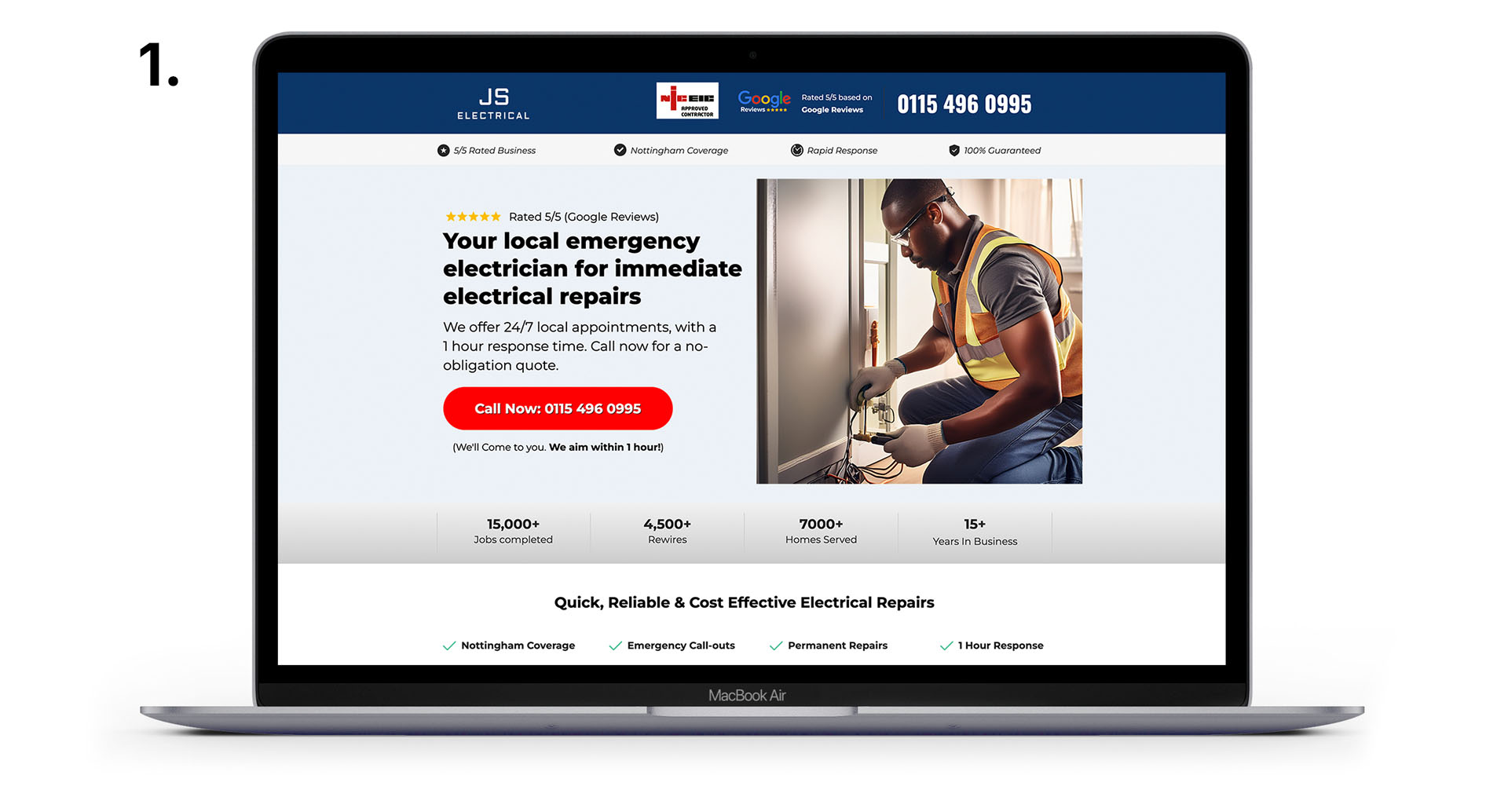
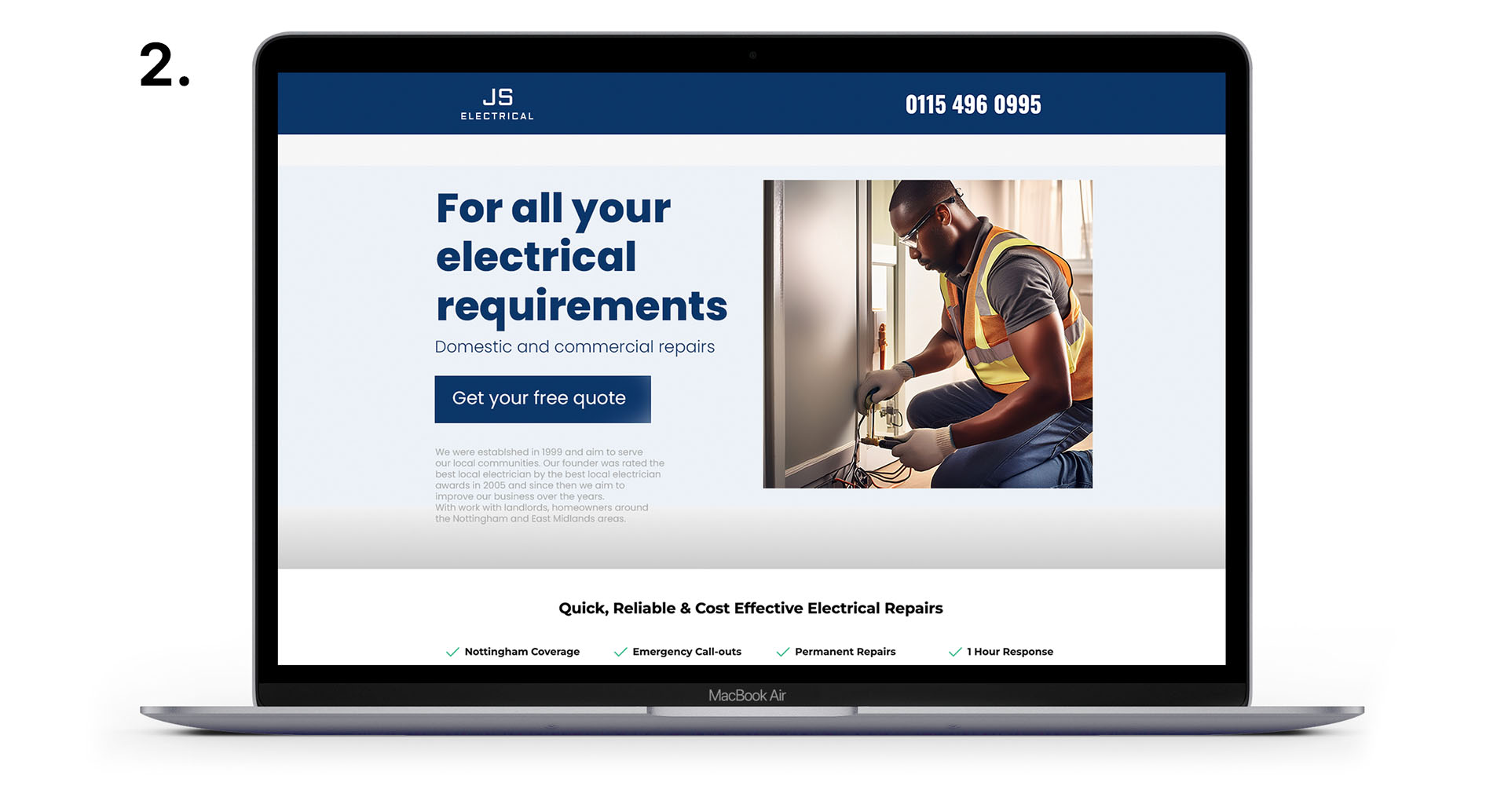 Most people reading this would suggest design 1 is better.
Why is this?
Because it speaks to the potential customer directly. Their pain points have been addressed and it highlights that the business can help solve the problem.
- The call to action is a phone call – This is an emergency situation, so the potential customer will want to speak to someone. A contact form wouldn’t work in this situation.
- It confirms their credentials – The potential customer needs a safe, reliable electrical solution.
- It niches down to exactly one service – Emergency call-out. Not a general ‘I need an electrician’ type of request. They can solve the problem quickly.
- It confirms the area they serve – So the potential customer doesn’t need to ask ‘do they serve my area?’
Next time...
In the next article, we'll look at ways of increasing engagement on your page by using multistep forms.

 Back to all articles