But not every window is the same length. Once you think in those terms, you start making very different decisions about when to advertise and how to follow up.
How long a lead stays live depends heavily on what you sell
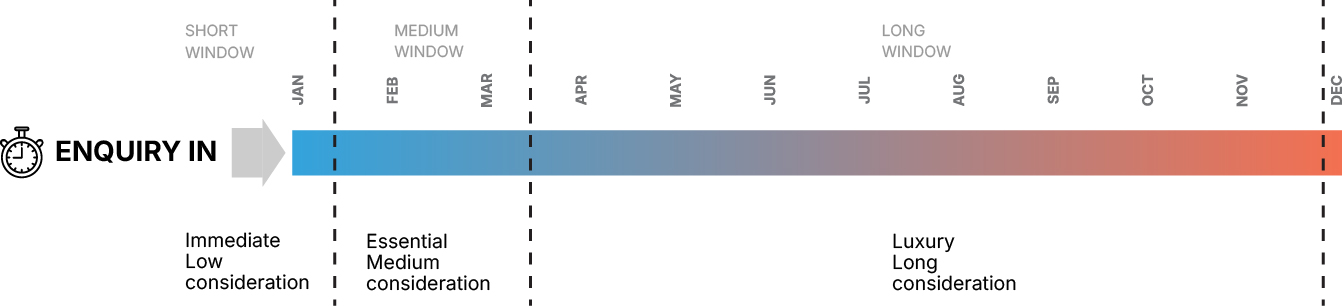
Emergency services have the shortest window of all. If someone’s pipe has burst or they’re locked out of the house, they’ll call whoever answers first and the job is done within hours. If an emergency plumber or locksmith hasn’t converted a lead within a few days, it’s gone.
Services with a clear short term need, such as self storage, sit in the middle. People compare a couple of options and may wait for a move date, so a month or two is a sensible window.
High ticket home improvement sits at the other end. Garden rooms, landscaping, outdoor kitchens, extensions and loft conversions are big, considered purchases. People talk it over with a partner, look at finance, get a few quotes and think about timing.
It’s perfectly normal for one of these leads to take anywhere from three months to a year to convert. That doesn’t make it a bad lead. It’s a normal one.
What a lead campaign is actually for
Lead based advertising on Google or Meta does exactly what the name suggests. It generates leads, not sales. What you’re really getting when someone fills in your form is permission: permission to quote, to survey, to send them information and to follow up.
That’s always been the case with high ticket items. Nobody books a £10,000 to £50,000 garden room from a Facebook ad on their lunch break. If you’re judging a campaign on whether it produced signed contracts in the same month, you’re measuring the wrong thing. The ad starts the conversation. Your follow up finishes it. For garden rooms and larger home improvement projects, that means not writing anyone off for up to a year unless they’ve told you no.
For garden rooms and larger home improvement projects, that means not writing anyone off for up to a year unless they’ve told you no.
Plan for the spring rush
Most people want their garden finished for summer, which means they want the work done in spring. If you wait for spring to start marketing, you’ll be fighting for attention alongside everyone else, and your diary will fill all at once.
The better plan is to get the enquiries in early and nurture those people towards committing before the busy period starts. It’s also worth thinking about who enquires early. Someone looking at patios in November is probably a planner who likes things organised and booked in. Planners also tend to commit at the quicker end of the window, which is exactly why they’re worth reaching now.
Let’s be honest, most people aren’t going to sign anything before Christmas. That’s fine, as long as your ads and follow up reflect it.
“Enquire now and have your new patio and outdoor kitchen ready for spring” isn’t a bad message, but it doesn’t match where people’s heads are in November. Something like “Reserve your new year build before the spring rush” speaks to what they’re actually thinking. They’re not ready to start yet, but they’d like to get moving in January and they like the idea of securing a slot.
Find out more about every enquiry
The more you know about each lead, the better your follow up can be. A few simple questions make a big difference. When are they hoping to make a decision? What will the space be used for? Will they need finance in place first? Someone waiting on a mortgage increase will naturally take longer than someone paying from savings, and knowing that lets you pace your follow up.
A loft conversion could be a spare bedroom, a hobby room or an extra bathroom. A bespoke garden room might be a home office, a gym or a base for a small business.
Once you know, you can send them the right case studies. People buy into what they can see, so if someone has asked about a loft conversion with an ensuite, show them loft ensuites you’ve completed, not a generic gallery.
Start the clock today
The sooner your Google and Meta ads go live, the sooner the conversion window starts. Start now and the enquiries you collect over the next few weeks can turn into bookings for February and March. Wait until January and those same conversions are more likely to land in May or June, exactly when competition picks up and your prospect has three other companies chasing them.

 Back to all articles