In a previous article, we covered how screen recordings help diagnose problems on a website usability issues, high bounce rates, low engagement. This time, the focus is on the flip side: using visitor behaviour proactively, to build better audiences and improve targeting.
What are micro conversions?
Micro conversions are the small, low friction actions a visitor takes on the way to a “macro” conversion - a purchase, or a submitted enquiry. They’re easy to set up and are useful to set up as ‘secondary’ conversions when running Google ads campaigns.
They typically include things like:
- Watching a video
- Downloading a brochure
- Scrolling past a certain point on the page (75%+ is a solid benchmark)
- Navigating to a specific, relevant page
- Signing up to a newsletter
What counts as a meaningful micro conversion depends on the business. An ecommerce site cares about add to carts and payment info entered; a lead gen business is more interested in brochure downloads or case study page visits.
Not all micro conversions carry equal weight
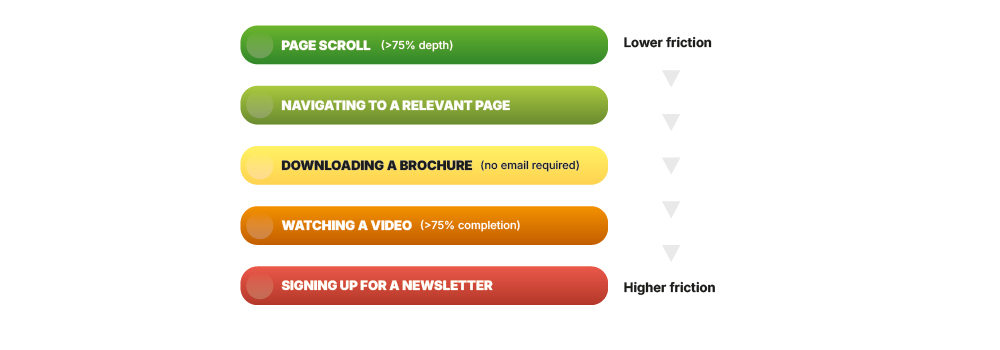
It’s tempting to treat every micro conversion the same, but they sit on a spectrum of intent. Watching a longer video to 100% completion, signals far more commitment than scrolling halfway down a page. As a rough rule of thumb, rank your events from lowest to highest friction.
The further down that list someone gets, the more qualified they are. The diagram below shows examples of this for a lead generation website.
Using micro conversions for retargeting
Micro conversions are a genuinely useful way to build audiences. Rather than retargeting everyone who’s touched your site, you can build tightly defined segments based on specific behaviour:
Visited the Product A page → serve a Product A-focused campaign
Engaged with the Service B case study → serve a Service B-focused campaign
This kind of behavioural segmentation tends to outperform broad retargeting, because the ad someone sees is directly relevant to what they’ve already shown interest in. However, you will need sufficient traffic for each event in order to be able to target in this way.
What micro conversions tell you about traffic quality
A healthy volume of micro conversions is usually a good sign it suggests the traffic hitting your site is engaged and relevant.
However, if micro events are significantly outpacing key events, that’s can be a sign your main call to action isn’t clear, your offer isn’t good enough or there’s friction somewhere in the journey stopping people from actually enquiring or buying.
Does a micro conversion actually influence sales?
This is where it gets genuinely useful. Analytics can also show you whether a micro conversion has a measurable influence on macro conversions. For example, what proportion of people who downloaded a brochure went on to submit an enquiry.
If that trend is positive, it’s a strong signal. Increase the visibility of that micro event. Move the brochure download higher up the homepage, or make it more prominent on relevant landing pages.
TLDR Summary
Every visit to your site is a chance to learn something about how people engage with it and those insights should be feeding directly into decisions about design and paid targeting, not sitting unused in a dashboard.
In short:
- Micro conversions are the small actions (video views, downloads, scroll depth) people take before converting and they’re easy to track in Google Analytics
- They’re not all equal. Weight them by intent, not just volume
- Use them to build tightly targeted retargeting audiences rather than one broad “everyone who visited” segment
- A high ratio of micro conversions to macro conversions usually points to a weak CTA or friction in the journey
- If a micro conversion correlates with conversions, give it more visibility on the page
Already running Google Ads?
These same micro and macro conversions can be fed straight into your campaigns as conversion signals sharpening your remarketing audiences, improving Smart Bidding accuracy, and cutting spend on traffic that’s unlikely to convert.

 Back to all articles