Previously, in the landing page essentials article, I discussed how a page for a time-critical service is more likely to convert with a ‘call now’ button. Likewise, e-commerce is even simpler – using a ‘buy now’ button (as well as a more indirect ‘add to basket’ button).
Going one better than a contact form
However, if a landing page is primarily used for lead generation, it will most likely include a standard contact form with fields such as ‘name’, ‘phone number’ and potentially some other pre-qualification questions. These types of forms are standard additions to most websites and are essential. However, there are other ways to collect contact details that are more engaging for the user and (most importantly) are measurable.
Enter the ‘multistep form’...
What is a multistep form?
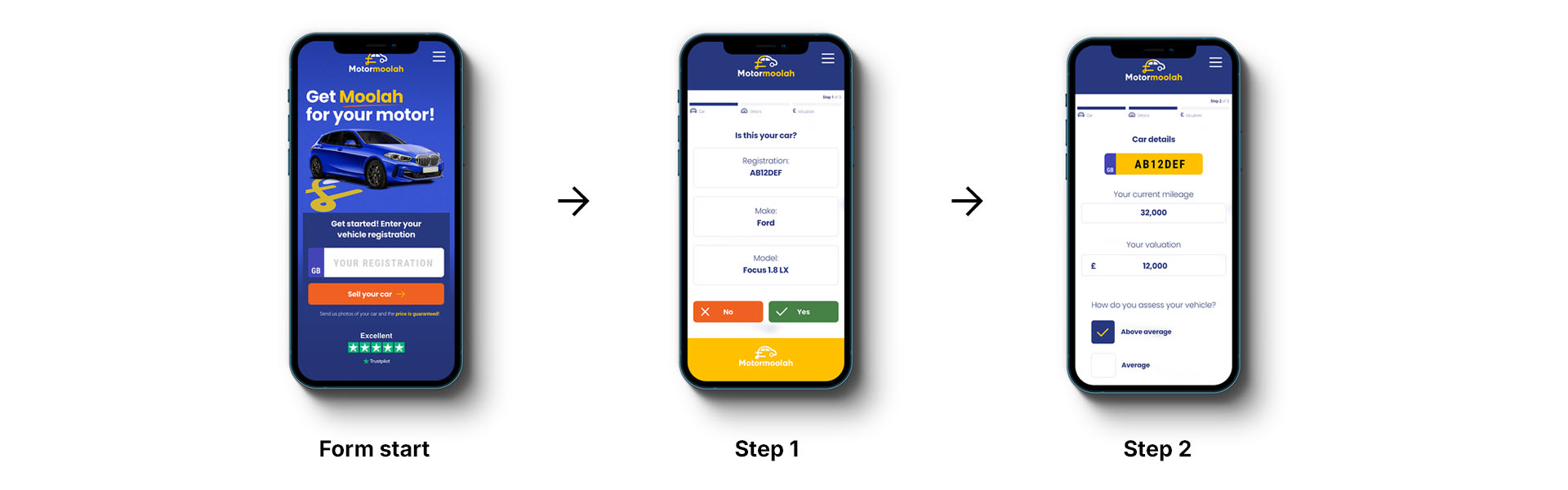
You’ll have seen these before – they’re often used to buy things like insurance, online. The format is simple: answer one question, click next to answer question two, and so on, with the option of adding your contact details at the end.
The benefits of a multistep form
Most online form builders allow you to customise your form with bespoke questions and provide you with essential insights on user behaviour before the form submission.
This is really useful because:
- It shows which questions lead to a high drop-off rate
- It pre-qualifies enquiries (saving time on follow-up)
- It improves lead quality (those who make it to the end are likely to be more interested parties)
- It helps to identify if there’s a problem with the quality of the page traffic and targeting
Therefore, it’s easier to see where the problems are and how to fix them.
You can also A/B test different questions, trial longer and shorter forms, as well as personalise some questions based on the answers the user provides. Some builders even let you build calculations, giving you the option of providing instant quotes.
For a fully customised approach, you can also have your own form designed and coded from scratch, like we did for one of our clients.
All of this makes the chance of more engagement and, ultimately, getting more enquiries much more likely. Most form builders will integrate with your existing website, making the form look completely seamless with the rest of your landing page.
When to avoid using multistep forms
There are times when a multistep form will not be suitable for your landing page.
For newsletter sign-ups, content downloads or waitlist joins that only need an email address, a multistep form would overcomplicate things. Multistep forms work best when there’s meaningful complexity to break down or psychological benefit to reducing perceived effort. If your form is already short or your audience values speed over guidance, keep it simple and use a ‘call now’ button or standard form as a call to action.
In the final part of this series, I talk about how to get more enquiries and sales from a 'thank you' page.

 Back to all articles